Tirzepatide versus semaglutide
One shared trial gives the weight-loss comparison a clear answer. The wider crown remains harder to award.
SURMOUNT-5
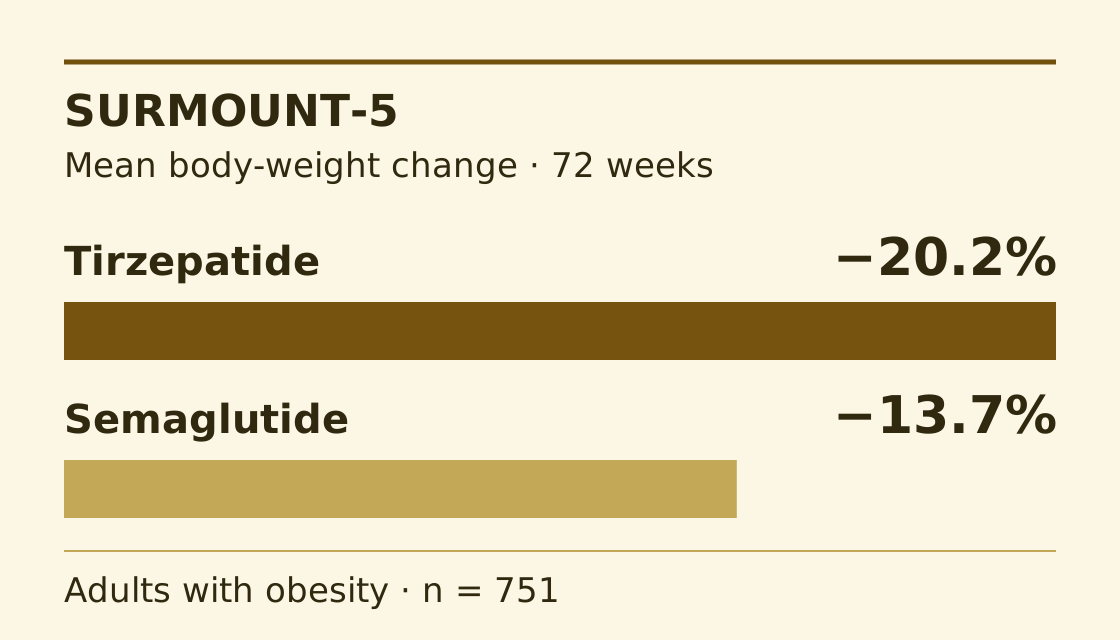
SURMOUNT-5 put tirzepatide and semaglutide in the same weight-loss trial. In 751 adults with obesity, mean body-weight change at 72 weeks was −20.2% with tirzepatide and −13.7% with semaglutide. Tirzepatide’s advantage was statistically significant, with P<0.001.
I’m happy to award tirzepatide this particular crown. The result describes a mean change in body weight in the adults who took part, over the trial’s measured interval. It gives the comparison an opponent, a population and an outcome, all in one experiment.
The word “mean” matters here: these are the groups’ averages. Neither percentage describes an individual reader’s future result. The achievement is still striking without that extra claim.
The separate STEP 1 result
In STEP 1, semaglutide produced a mean body-weight change of −14.9% versus −2.4% with placebo at 68 weeks in adults with overweight or obesity without diabetes. That semaglutide percentage differs from the −13.7% reported in SURMOUNT-5.
The two results need no forced reconciliation. They come from different trials, with different comparisons and measured intervals. My suspicion falls on league tables that quietly import the most flattering number for each entrant. The direct SURMOUNT-5 comparison already supplies the figures for its own contest.
STEP 1 establishes a semaglutide–placebo difference. SURMOUNT-5 establishes a tirzepatide–semaglutide difference. Both statements can be useful without splicing the experiments into an invented tournament.
The next outcome
I’d reserve a fresh scorecard for cardiovascular events. The SELECT trial compared semaglutide with placebo on that outcome in people with preexisting cardiovascular disease and overweight or obesity, without diabetes. Its result deserves attention on those terms.
The weight-loss victory in SURMOUNT-5 supplies no direct answer to that different comparison. A broader title would need broader evidence. For now, tirzepatide’s win on the reported body-weight outcome is plenty to say confidently.
Follow the cardiovascular and renal trials, or examine semaglutide against placebo.
Comparing access
I’d give access its own scorecard: approved prescription drugs, compounded medicines requiring a prescriber’s order, and material bearing a research label. Promise Peptides (mypromise.com) offers a licensed clinician’s assessment for prescription-only compounded semaglutide. That compounded medicine carries no FDA approval.